
What Is Cold-Pressed Oil? A Simple Guide
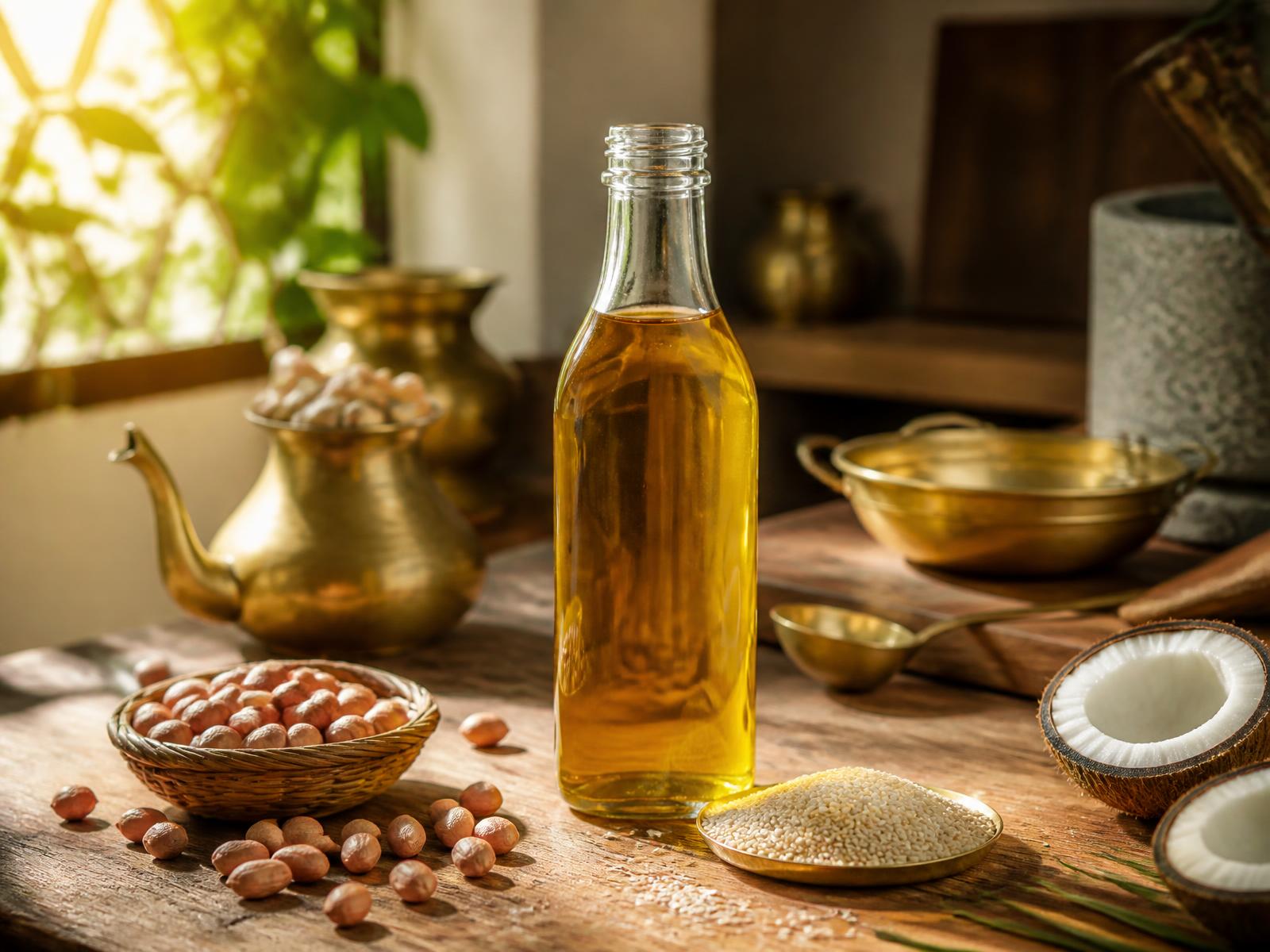
Cold pressing is one of the simplest ways to get oil out of a seed. Here is what the term actually means, and what it does not.
The short answer
Cold-pressed oil is oil that has been mechanically pressed out of seeds or kernels at a low temperature, without solvent extraction, chemical bleaching or deodourising.
The idea is simple: press slowly, keep the heat low, and let the oil stay as close as possible to the form it had inside the seed.
How the process works
Cleaned seeds are fed into a press — traditionally a wooden ghani, today often a slow mechanical expeller. The seed is crushed gradually, and oil separates from the cake.
Because the press turns slowly and generates limited heat, the oil is not exposed to the high temperatures used in industrial refining. Filtration is usually minimal, which is why cold-pressed oil can look slightly cloudy.
What cold pressing does — and does not — mean
Cold pressing describes a method of extraction. It tells you how the oil was made, not that the oil will treat or prevent any condition.
It also does not mean the oil is flavourless. Minimal processing keeps aroma compounds in the oil, which is why cold-pressed groundnut, sesame and coconut oils smell distinctly like the seed they came from.
How to store it
Keep cold-pressed oils in a cool, dark place, close the container tightly and use a dry spoon. Heat, light and moisture are the three things that shorten the life of any natural oil.
Frequently Asked Questions
- Is cold-pressed oil the same as filtered oil?
- Not necessarily. 'Filtered' describes how much sediment was removed; 'cold-pressed' describes how the oil was extracted.
- Why is cold-pressed oil sometimes cloudy?
- Minimal filtration leaves fine natural particles in the oil, which can settle at the bottom of the container.