
Cold-Pressed vs Refined Oil: Understanding the Difference
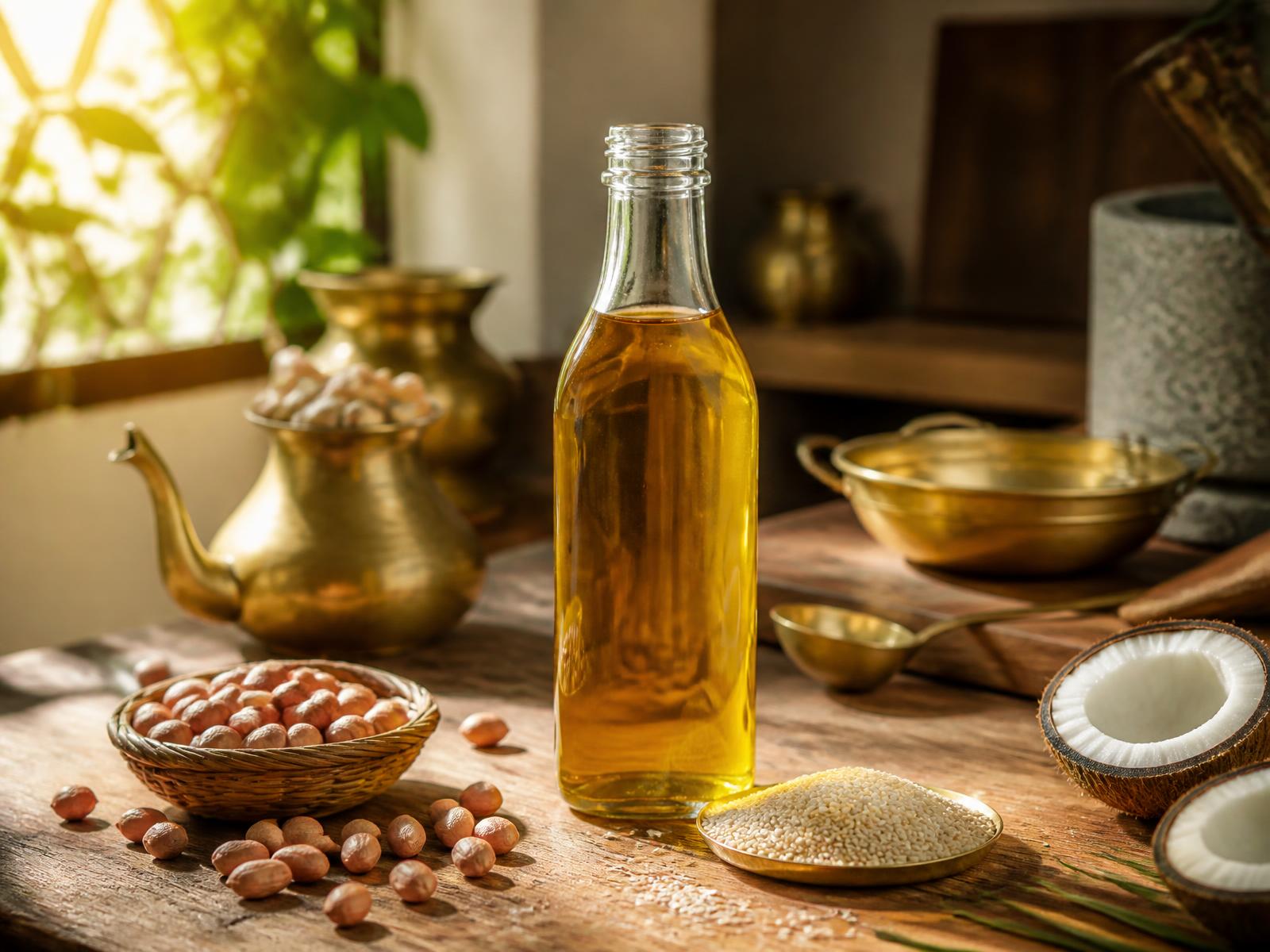
Two oils from the same seed can be very different products. The difference is in the processing.
Different journeys from the same seed
Cold-pressed oil is pressed mechanically at low temperature and lightly filtered. Refined oil typically goes through additional steps such as degumming, neutralising, bleaching and deodourising.
Refining produces a neutral, uniform, long-shelf-life oil. Cold pressing keeps more of the seed's own character.
What you notice in the kitchen
Cold-pressed oils smell and taste like their source. Refined oils are largely neutral, which some recipes prefer.
Colour also differs: cold-pressed oils are usually deeper and less uniform, batch to batch.
Choosing between them
Neither category is a medicine. Choose based on the flavour you want, the cooking method, and how transparent you want the ingredient list to be.
Many households keep both: a cold-pressed oil for everyday cooking where aroma is welcome, and something neutral for specific recipes.
Frequently Asked Questions
- Is refined oil unsafe?
- Refined edible oils sold legally are food-safe. The difference is processing, flavour and how much of the seed's natural character remains.
- Does cold-pressed oil last as long?
- Usually less long than refined oil, because minimal processing retains natural compounds. Store it cool, dark and closed.